Masseria Palaci
This is not a place you visit, it’s one you tune into - There is a particular moment, somewhere along the road in southern Puglia, when the landscape begins to quieten. The horizon flattens, olive trees stretch endlessly, and the air carries that dense, sun-warmed stillness that belongs only to this part of Italy.
Masseria Palaci does not interrupt this rhythm, it absorbs it.
Set a few kilometres inland from the Ionian coast, near the beaches locals half-ironically call the “Maldives of Salento,” the masseria feels removed from any sense of destination. The surrounding land holds traces of a much older time: prehistoric dolmens, ancient paths, agricultural patterns that have outlived generations. Here, time is not curated, it lingers.
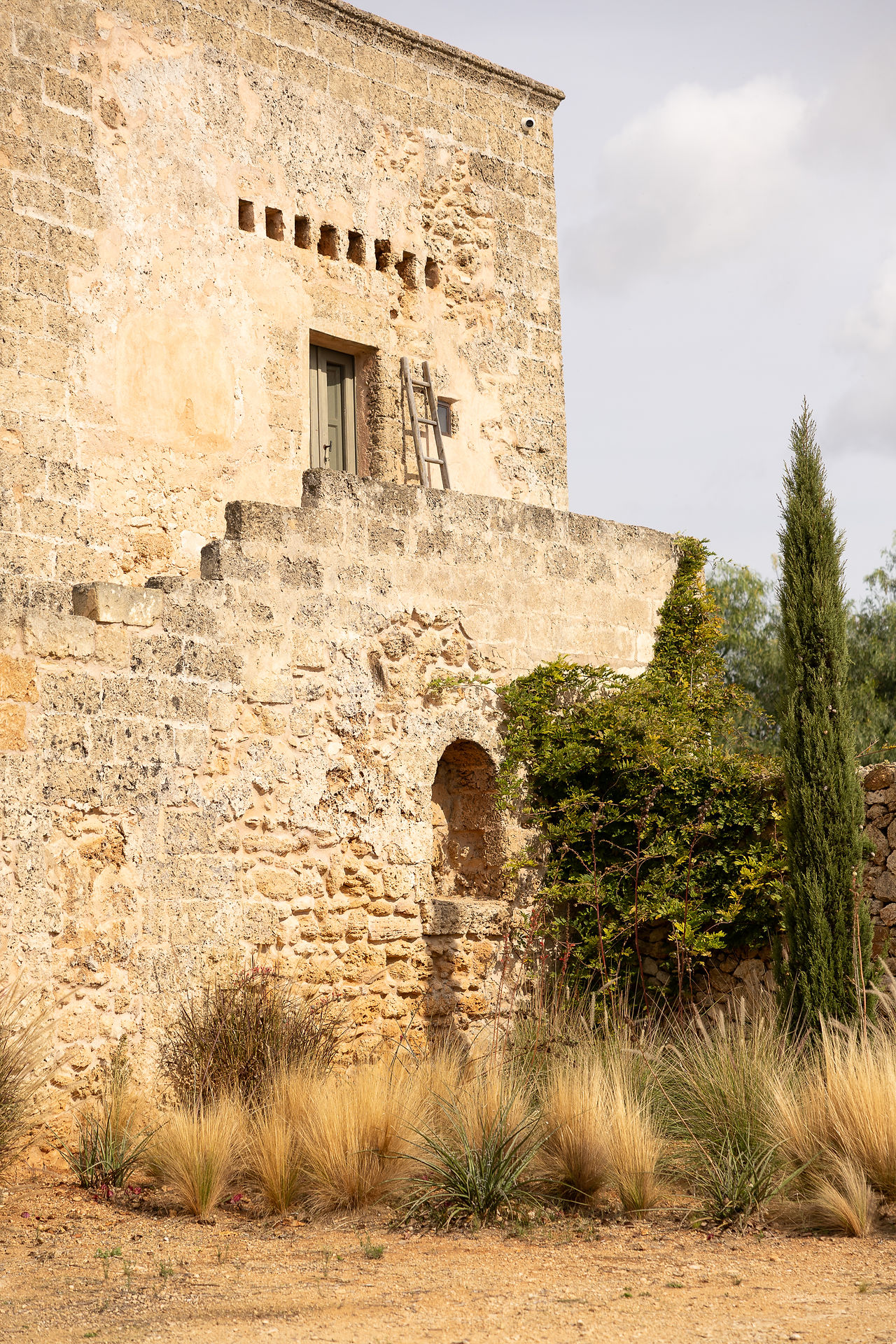
What exists today is the result of patience. When Francesco Russo - the Apulian-born designer behind one of Italy’s most refined footwear maisons - first encountered the property in 2008, only a solitary tower remained. The rest had receded into ruin. What followed was not a restoration in the traditional sense, but a slow reconstruction guided by intuition as much as by memory. Over thirteen years, Russo rebuilt the masseria piece by piece, allowing it to take shape in dialogue with its surroundings rather than in opposition to them.
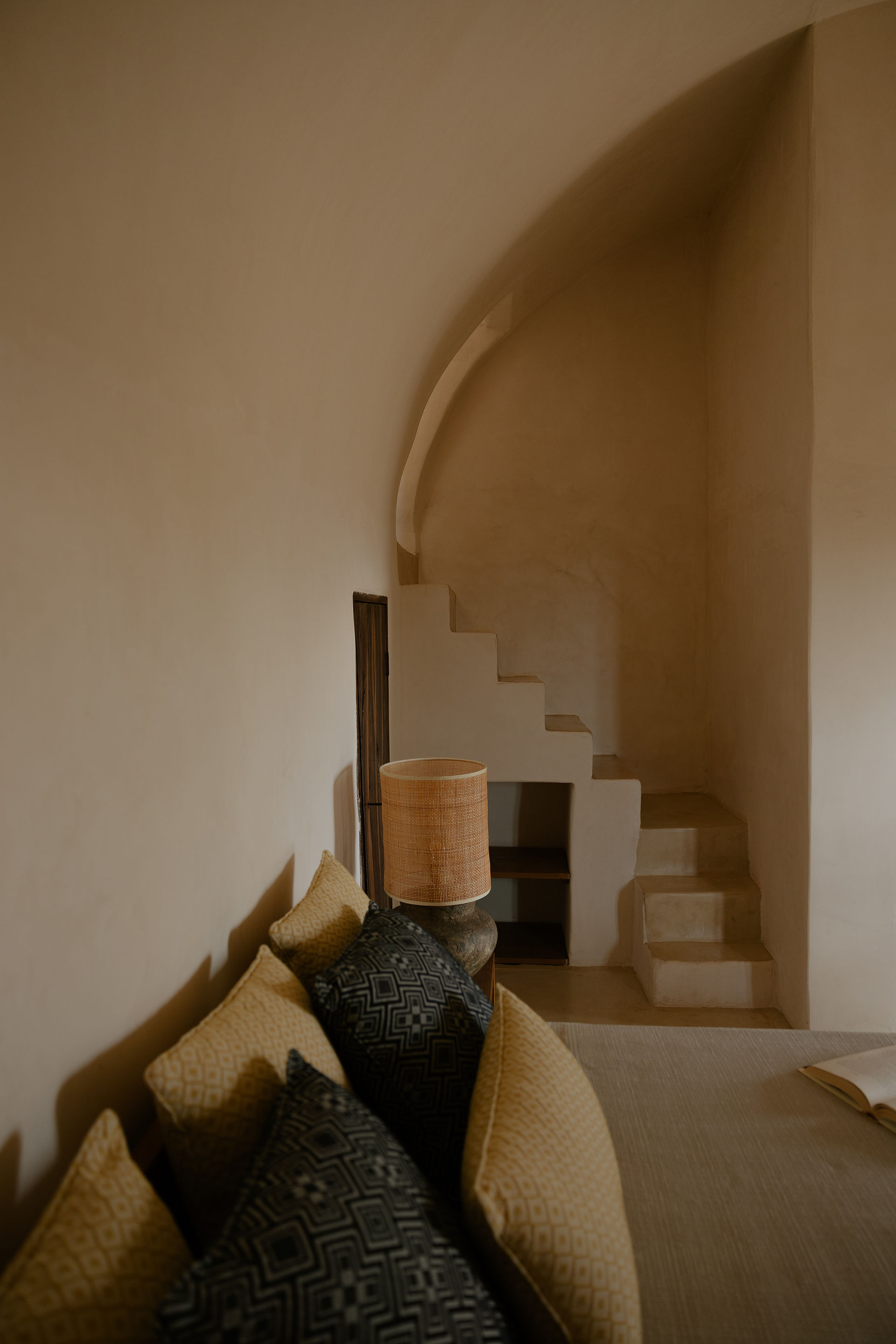
There is a quiet rigour to the way the space has been conceived. Nothing feels decorative, and yet everything feels considered. Materials are left close to their original state - stone, lime, wood - while proportions and light do most of the work. Interiors are pared back, but never austere; instead, they hold a softness that comes from restraint rather than addition.
The property accommodates just nine rooms, each opening directly onto the gardens, dissolving any clear boundary between interior and exterior. Privacy is not enforced but naturally occurs, shaped by space, distance, and silence. It is a kind of luxury that does not announce itself, but reveals itself gradually.
Life at Masseria Palaci unfolds in accordance with the land. The agricultural dimension is not a gesture, but a foundation: orchards, vegetable gardens, and a daily rhythm that follows seasons rather than schedules. Meals emerge from this ecosystem - simple, precise, and often shared around long tables that encourage a slower kind of gathering.
And yet, for all its rootedness, the masseria never feels static. There is movement here - subtle, continuous - in the way light shifts across surfaces, in the transition from solitude to conviviality, in the option to engage or withdraw. A 25-metre pool cuts through the landscape like a quiet horizon line, terraces open towards the distance, and small pockets of space invite pause without prescribing it.
Experiences are present, but gently so: a boat tracing the coastline, a walk through archaeological sites, a cooking session around a wood-fired oven. They exist as extensions of the place, not as interruptions to it.
What Francesco Russo has created is, ultimately, a study in balance. Between past and present, between design and absence, between hospitality and privacy.
In a region increasingly defined by its visibility, Masseria Palaci remains deliberately understated - a place that does not compete for attention, but rewards it.